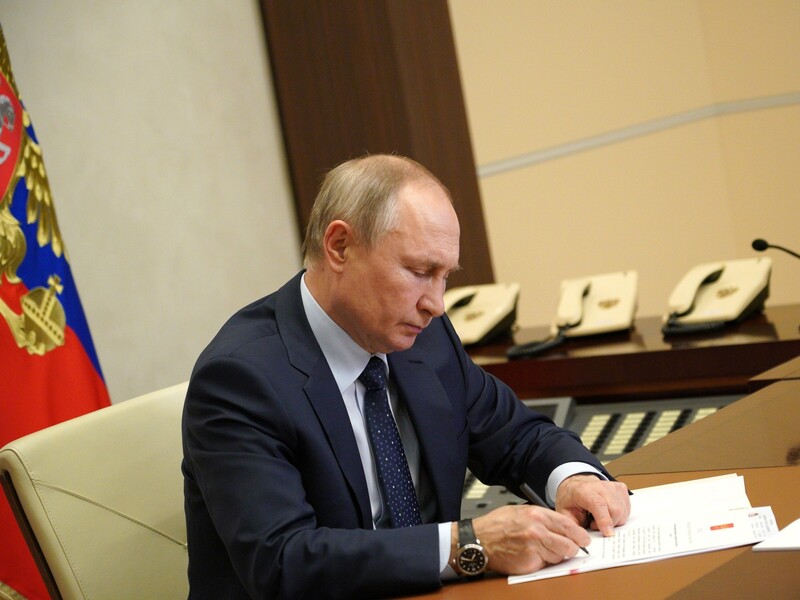
At the end of December, an event happened that was ignored by the general public against the background of New Year’s holidays and massive rocket attacks by the Russian army. But the significance of this event among all political initiatives of the Kremlin is almost the greatest in the last year. This is a decree signed by the President of the Russian Federation on December 18. Analysts called it an actual declaration of war on Kazakhstan and Moldova. What it is about and why it is so important, read on.
Standard program
The decree states that citizens of Kazakhstan, Moldova, and Belarus can receive passports of the Russian Federation.
Passportization of citizens of other countries is something that the Russian Federation does as soon as it seizes any foreign territories. This happened in Crimea, Luhansk, Donetsk, and in the occupied territories of the Zaporizhzhia region in Ukraine. The passportization of locals makes it possible to legitimize further aggression because the people who are here are becoming Russians, whether they want it or not. Next, Russia can talk endlessly about the protection of its citizens, about those who speak the Russian language, etc.
Why now?
The time for signing this decree was not chosen by chance. Therefore, there are three reasons:
1. In the Russian information space, there is now a lot of talk about the fact that everything about Ukraine has been successful. Against the background of these victorious moods and euphoria, which really manages to relay to a large part of Russians, further imperial plans are perceived favorably.
2. Citizens of states that have not been able to get out of Russia’s influence are frightened by the events in Ukraine and decide for themselves the dilemma of whether it is worth resisting the aggressor neighbor or whether it is better to surrender without escalation. Many choose the second option in fear of the future.
3. Elections are scheduled for 2024 in both Moldova and Kazakhstan. The population of these countries is already making their choice. This is an ideal time to put “Kremlin puppets” in power here, who will facilitate the solution of Moscow’s imperial tasks with minimal effort.
And if in Belarus the majority of those who disagree with full russification left the country a long time ago, and no protests are even theoretically allowed here, things are a little different with Kazakhstan and Moldova.
There is no doubt that the next year will be decisive for these countries. The world is watching Moldova with hope. There, the idea of future European integration is quite strongly supported. Undoubtedly, Moscow will do everything to harm these plans. But whether the Kremlin will succeed in this will become obvious in the next six months or a year because the theater of political struggle with the decree on passportization signed by Putin has just announced the first act.