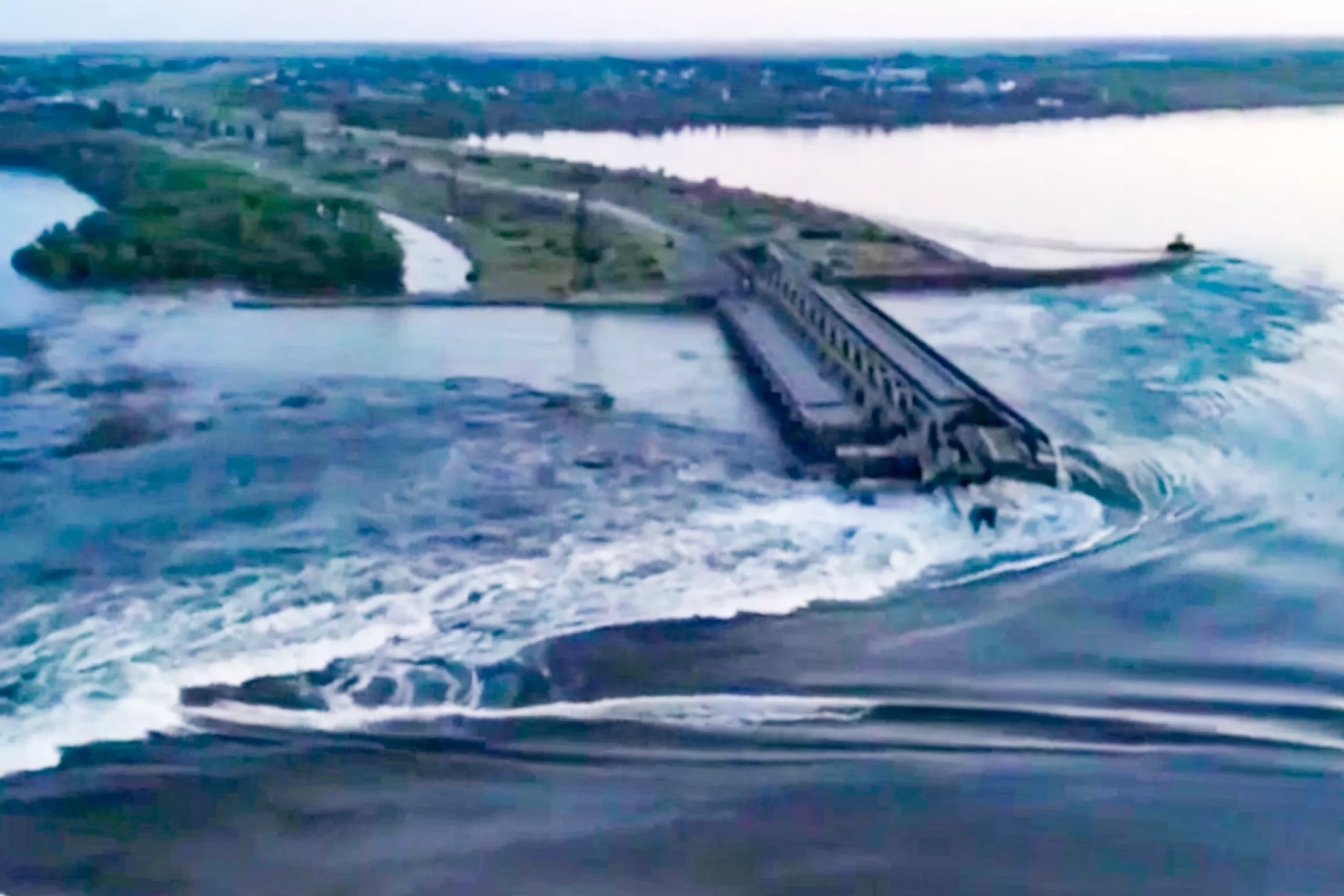
The European Commission has “strongly” condemned the bombing of the Kakhovka hydropower plant in southern Ukraine by Russian occupation troops and called it “appalling and barbaric”. This position was voiced by EU foreign policy spokesman Peter Stano.
“Obviously, this is taking place in the context of illegal Russian aggression, in which Putin does not hesitate to use as weapons starvation, energy, winter and nuclear power plants in Ukraine,” he said.
For his part, European Council President Charles Michel admitted, that he was shocked by the destruction of the Kakhovka hydroelectric dam and promised to hold Russia accountable at the EU summit in June.
“The destruction of civilian infrastructure clearly qualifies as a war crime – and we will hold Russia and its proxies to account,” Michel wrote on Twitter and offered more help to the flooded areas.
“My thoughts are with all the families in Ukraine, who have been affected by this disaster,” Michel said.
“The terrorist state Russia has turned water into a weapon. This is a war crime,” was how Estonian Prime Minister Kaja Kallas reacted to the dam explosion and called for helping Ukraine win the war.
German Chancellor Olaf Scholz called the bombing of the Kakhovka hydropower plant a “new dimension” of Russia’s war against Ukraine. In his words, blowing up the hydroelectric plant “fits into the way Putin is waging this war”. Scholz added, that Russia always attacks civilian targets – cities, villages, hospitals, schools, infrastructure.
“That is why it is so important that we support Ukraine – financially, but also by supplying weapons,” he stressed.
NATO Secretary General Jens Stoltenberg called the bombing of the dam at the Kakhovka hydroelectric power station “an outrageous act, which once again demonstrates the brutality of Russia’s war in Ukraine”.
The presidents of Georgia and Moldova unanimously “condemned the bombing of the dam”. Salome Zurabishvili called it a war crime for which the perpetrators must be punished, while Maia Sandu offered Kiev’s help in dealing with the consequences of the flooding.
Lithuanian Foreign Minister Gabrielius Landsbergis said – Ukraine must win on the battlefield, as only force can stop terrorists.
In Russia, however, the destruction of the Kakhovska hydroelectric power plant has already been described as “a deliberate sabotage by the Kiev authorities”. Vladimir Putin’s press secretary Dmitriy Peskov said this. Trying to deny the responsibility of the Russian occupiers, he said, that the alleged “sabotage” was due to the “lack of success in the counterattack by the AFU” as it was “choking up”.
And while the cynical position of the Russian side is no longer even surprising, the UN reports today have aroused the indignation of many. The fact is that a few hours after the Russians blew up the Kakhovskaya HPP dam, the organisation published a message on its official Twitter about “Russian Language Day”.
And retweeted a publication by Russian UN officials, which said: “The Sustainable Development Goals are a common call to action to eradicate poverty, protect the planet and ensure that all people live in peace and prosperity.
Such messages have already provoked negative reactions from the Ukrainian side. Furthermore, Foreign Minister Dmytro Kuleba was outraged, that some Western media hinted at possible Ukrainian responsibility for the bombing of the Kakhovka hydroelectric power plant.
“It is outrageous, that some media outlets publish, that ‘Kiev and Moscow are blaming each other’ for the destruction of the Kakhovka dam. This puts facts and propaganda on a par,” Kuleba said.
The minister stressed, that Ukraine is facing a huge humanitarian and environmental crisis. “To ignore this fact is to play the Russian game of ‘not everything is so unambiguous’,” Kuleba added.