Russia is waging a war against Ukraine in the forests of Kharkiv region, the steppes of Kherson region, and amidst the slag heaps of Donbas. However, the area of hostilities is not limited to just the east and south of Ukraine. In their war against Ukrainians, the Russians use not only missiles and guided aviation bombs, tanks, and artillery.
For the Kremlin, the informational front is equally important, with insane amounts of money allocated for this battle. The 2025 budget project allocates 137,200,000,000 rubles (1.42 billion dollars) for state propaganda. Compared to 2024, media costs will increase by 15.9 billion rubles, or 13%, and their total amount will exceed the annual budgets of average Russian regions (for example, 135 billion rubles in the Kaliningrad region, 110 billion rubles in the Perm region).
Moscow seeks to discredit the Ukrainian military-political leadership in the eyes of Russians and the international community, undermine trust from Western, African, Latin American, and Asian leaders, create divisions within the Ukrainian elite, and demoralize Ukrainians.
According to information received anonymously from informed sources familiar with Russian hybrid activities abroad, there is currently an intensification of Russian information operations aimed at discrediting the President of Ukraine, the Office of the President of Ukraine, and other representatives of Ukraine’s military-political leadership. Against the backdrop of the inability to achieve the goals of the so-called “Special Military Operation” on the battlefield, the Russian propaganda machine led by Sergei Kiriyenko plans to launch a massive anti-Ukrainian information campaign in the near future, fabricating and spreading manipulative messages and blatant lies about the supposed “illegitimacy of Ukraine’s leadership,” its “unreliability and desire to fight to the last Ukrainian,” “tolerance of Nazism” and “support for international terrorism,” “total corruption in the government,” “ineffective use of Western aid,” and more.
Already today we can observe the emergence of publications in certain media outlets that play into the hands of Russian propaganda, indicating that Russia is starting to measure the reaction of the target audience to one or another narrative in order to identify the most reactive topics.
It is forecasted that the campaign will peak on the eve of Donald Trump’s inauguration and in the first months after he officially takes office. The intensification of propaganda efforts is associated with an attempt to hinder the establishment of a constructive dialogue between Ukraine and the new U.S. presidential administration in order to prevent the end of the war on terms unfavorable to Russia.
The Kremlin’s plans involve using its capabilities to surround Ukrainian opposition politicians, experts, and journalists to provoke statements criticizing Volodymyr Zelensky and his team, aligning with the narratives of Russian propaganda, creating discord in Ukrainian society, and providing the opportunity for Russian propaganda to speculate in Western media on the theme of a “political crisis” in Ukraine.
Furthermore, a scenario is not ruled out in which Russian special services may resort to radical actions, including attempts on Ukrainian opposition figures aimed at provoking and inciting Ukrainian society to engage in protest actions.
The main goal of Russian information-psychological operations is to create an image of the Ukrainian leadership as incompetent, corrupt, and incapable of effective management. In recent months, Russian propagandists have tried to spread such “news” as “cancellation of elections made the Kyiv government illegitimate,” “the Ukrainian nation may disappear completely,” “Zelensky bought a hotel in Curacao for 88 million euros,” “the son of former Ukrainian Foreign Minister bought an iron throne from ‘Game of Thrones,’…”
The highest ranks of the Russian government, which are targeted by the Kremlin’s disinformation activities in the foreign information space, were thoroughly investigated by The Washington Post back in February 2024.
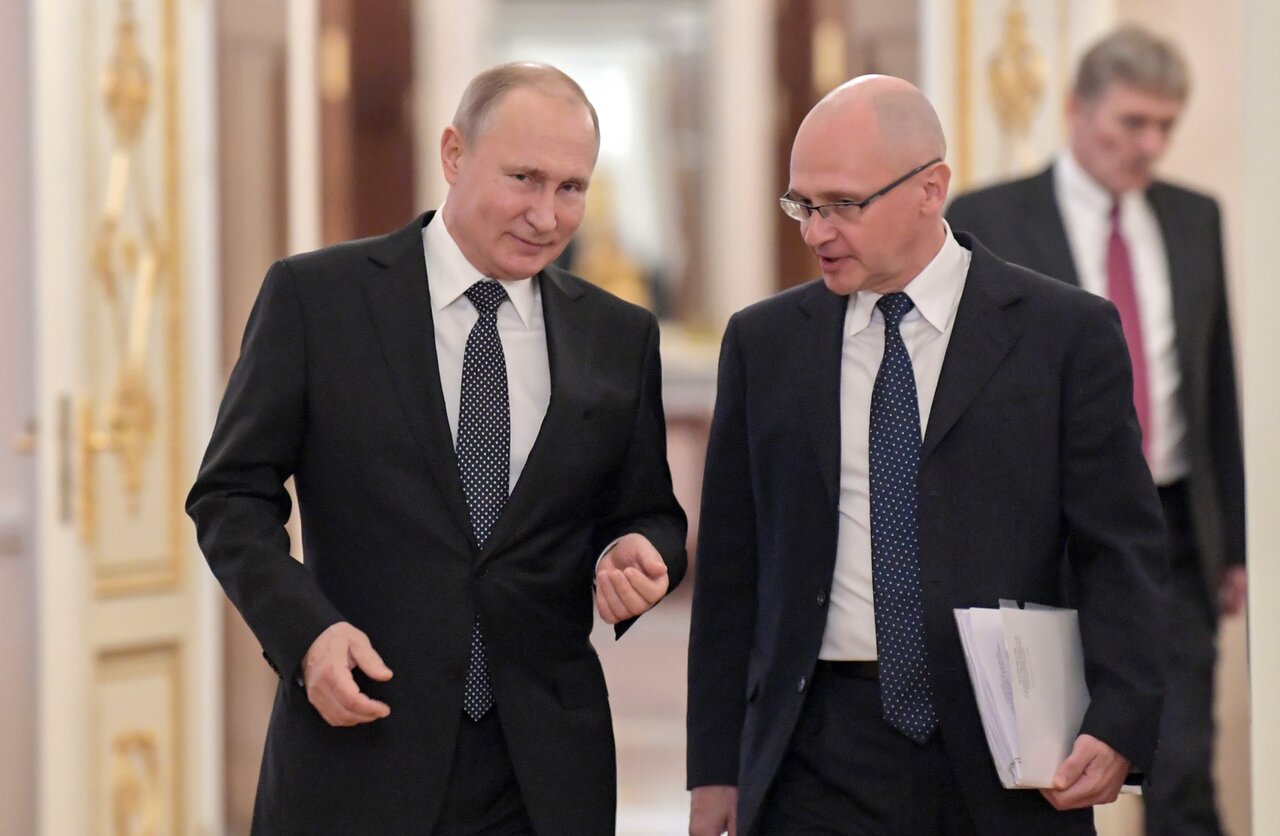
According to The Washington Post, the chief curator of such campaigns is the first deputy chief of staff of the Russian presidential administration, Sergey Kirienko, who is close to Vladimir Putin. Under his leadership, two disinformation groups were actually created.
Leading the campaign focused on destabilizing the situation within Ukraine was one of Kirienko’s closest associates – the head of the Russian president’s department for monitoring and analyzing social processes, Alexander Kharichev. And heading the group aimed at undermining support for Ukraine in Western countries was the head of the Russian president’s department for the development of information and communication technologies and communication infrastructure, Tatyana Matveyeva.
As reported by our interlocutor, in addition to the individuals mentioned, in the implementation of the campaign to discredit the top military-political leadership of Ukraine, including the creation of media content and its dissemination in the media and social networks under the overall coordination of S. Kirienko, ANO “Dialog”, “Studio of Artemy Lebedev”, individual Russian experts in IPSO, media professionals, PR specialists, and pro-government bloggers are actively involved.
ANO “Dialog” is a structure created in 2019 formally to expedite the resolution of issues brought to the attention of authorities. In reality, it is engaged in producing and disseminating fake news and disinformation about Russia’s aggressive war against Ukraine in support of Kremlin propaganda, as well as managing the accounts of many Russian government agencies, educational institutions, and propagandists (such as V. Solovyov) on social media.
After the disastrous full-scale invasion in 2022, “Dialog” began analyzing how social media reacts to news related to the war, as well as making recommendations to the Ministry of Defense of the Russian Federation on responding to resonant events.
“Dialog” is responsible for spreading many fakes, including that Ukrainian military allegedly started selling their awards on eBay, about Swiss real estate of senior Ukrainian officials, about “degrading” vacancies offered to Ukrainian refugees in Poland, about mobilization of women in Ukraine, about Ukrainian soldiers being given aggression-increasing pills, and more. Among other things, “Dialog” was also involved in spreading posts criticizing the head of PMC Wagner Yevgeny Prigozhin, who conflicted with the Russian Ministry of Defense.
On July 28, 2023, the NGO “Dialog” was included in the EU sanctions list for spreading disinformation and propaganda in support of Russia’s war against Ukraine. On September 4, 2024, the NGO “Dialog” and its leader Volodymyr Tabak were included in the US sanctions list for “harmful influence” on the 2024 presidential elections.
Vladimir Tabak became known in 2010 after the release of a scandalous calendar with photos of MDU students in underwear, dedicated to Vladimir Putin’s 58th birthday. He then became an active participant in projects of the then Deputy Head of the Presidential Administration of Russia Vladislav Surkov. After Surkov’s resignation, Tabak was patronized by Sergey Kiriyenko, the first Deputy Head of the Presidential Administration of the Russian Federation. It was under Kiriyenko that Tabak took over “Dialog.”
The role of “Artemy Lebedev’s Studio” in the campaign to discredit Ukraine is more ambiguous. It is likely that Lebedev’s creative agencies are involved in creating texts and visual products accompanying the informational component.
Alexey Lebedev has earned a reputation as the most famous web designer and main troll of the Russian internet. However, since the annexation of Crimea and Russia’s full-scale invasion of Ukraine, his rhetoric has become more aligned with the Russian propaganda machine.
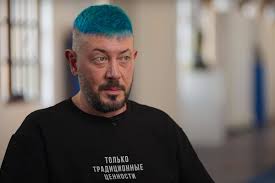
Accusations that “Artemy Lebedev’s Studio” hides large state contracts, in addition to numerous contracts for rebranding Russian cities, the Moscow metro, or the National Guard of Russia, were directed at the designer even by Alexei Navalny.
Lebedev is also the founder of the internet advertising agency “Reklama.ru,” and since October 2023, he has been the director of design at the VKontakte social network, where he supposedly oversees “the management of product design for the social network and the development of approaches to working on user interfaces,” as well as developing the “overall vision of the social network’s design.”
After his appointment at “VKontakte,” which has long been a state-owned and fully controlled asset of the Russian Federal Security Service (FSB), rumors spread that the individuals who made the decision to appoint Lebedev outrank the CEO of the VK holding, Vladimir Kiriyenko (son of the first deputy chief of staff of the Russian presidential administration, Sergei Kiriyenko), and the 29-year-old head of the VK social network, Stepan Kovalchuk.
Lebedev actively supports Putin and his unleashed war against Ukraine. He has repeatedly traveled to the annexed Crimea by Russia and to the territories of Donbas not controlled by the Ukrainian government.
In 2020, Artemy took part in shooting an agitational video about the amendments to the Russian Constitution for the RT channel, and since July 2021, he has become a host on the mentioned propagandistic media.
Evidently, Lebedev’s work for the administration of the Russian president is not limited to his public activities. In 2020, he was awarded the Order “For Merit to the Fatherland” II degree medal “for merits in the formation and development of the Russian segment of the information and telecommunications network ‘Internet’.”
Trying to achieve its goal, the Kremlin and Russian propagandists use several methods in working with articles from international media. Firstly, they pull phrases out of context. Secondly, they engage in manipulative interpretation, distorting the meaning of publications. Thirdly, they shift the focus, turning critical analysis or commentary into direct accusations. Fourthly, they fabricate fakes based on real Western publications.
In the world created by Russian propagandists, the Foreign Policy article about the exhaustion of Ukraine through war is presented as a call from the West to Ukrainian leadership to stop the “senseless war.” Newsweek’s publications about the lack of personnel appear as a “willingness to fight to the last Ukrainian.” The Spectator’s analysis of corruption challenges in Ukraine turns into “evidence” of the need to end support for Ukraine.
In December 2022, The Washington Post published an analytical piece about the challenges facing Zelensky, including internal debates on the duration of the war. The article focused on the complexity of decisions the president faces under external pressure. However, Russian propaganda used this material to portray Zelensky as a “West puppet,” supposedly acting against Ukraine’s interests. Headlines on Russian sites like RT and “Vzglyad” claimed that the “West is disappointed with Zelensky” and “Zelensky is failing to govern the country.” In doing so, the context indicating international community support was completely ignored.
Western media often cover conflicts within Ukraine’s military-political leadership. For instance, Western mass media have reported on tensions between military and political leaders over resource allocation. Articles often focus on analyzing democratic processes in wartime conditions. Yet, Russian media portray them as a “rift between the army and the government.” If previously it was a “rift” between President Zelensky and former Chief of the General Staff Valeriy Zaluzhny, now it is between Zelensky and current Chief of the General Staff Oleksandr Syrsky.
This type of interpretation is aimed at undermining trust in Ukrainian society towards its leaders. Russian media widely spread claims of “chaos at the top”, which, according to their plan, was meant to demoralize both Ukrainian citizens and military personnel.
But the main thing is that through manipulations with publications of Western media, narratives are created aimed at Ukraine’s allies. The goal is to sow doubts about the competence of Ukrainian leaders and demonstrate a decrease in support from the West.
Russian media often distort real statements of Western leaders to support their theses on “Ukraine’s insolvency” or “exhaustion of Western support”. For example, in January 2023, Russian media actively quoted Die Welt, discussing delays in arms supplies. These materials were accompanied by manipulative conclusions that “The West is tired of Zelensky”.
To promote propagandistic narratives discrediting Ukrainian leadership, the Kremlin is willing to pay large sums for placing pro-Russian comments in well-known Western media and for the efforts of those “influential individuals” on social networks in the USA and Europe who were willing to work with Russian clients. Thus, The Washington Post writes that Russians were willing to pay up to $39,000 for the insertion of pro-Russian comments in leading Western media.
By using distorted quotes, false narratives, and pseudo-analytics, Russian propaganda skillfully creates the illusion of international legitimacy for its positions. However, this approach also reveals its weaknesses – dependence on manipulations and falsifications instead of real support or arguments.
The exposure of such campaigns and the consolidation of efforts by free media remain the main tools to counter this flow of misinformation. The issue is not just about defending Ukraine, but also about preserving global democratic values, which are also becoming the targets of Russia’s information operations. While Russia’s armed aggression is currently directed against Ukraine, Russia’s hybrid war involving information-psychological operations, foreign interference, and manipulation of information is being waged against the entire civilized world, causing political and social tension and jeopardizing the existence of Western democracies.