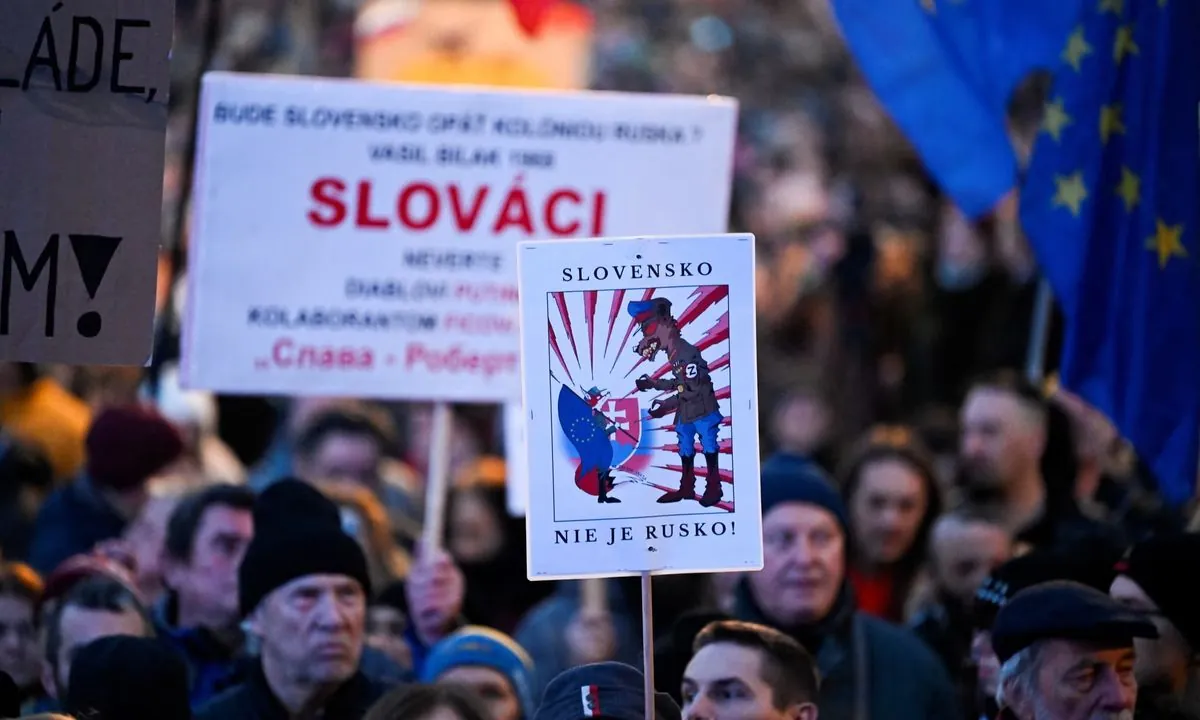
In the evening of January 24, 2025, Slovakia was engulfed by a wave of mass protests under the slogan “Slovakia is Europe”, aimed against the policies of Prime Minister Robert Fico. Tens of thousands of citizens took to the streets in over 20 cities of the country, including Bratislava, Kosice, Zilina, and Banska Bystrica, expressing their dissatisfaction with the government’s pro-Russian stance and potential threats to democratic values.
Tens of Thousands of Protesters
In the capital, Bratislava, according to organizers’ estimates, around 60,000 protesters gathered. Overall, more than 100,000 people participated in the actions across the country, making these protests the largest since the Velvet Revolution of 1989.
Protesters expressed concerns about Fico’s pro-Russian orientation, especially following his recent meeting with Russian President Vladimir Putin in December. They demanded the resignation of the Prime Minister and confirmation of Slovakia’s European course. Participants held banners with the slogan “Slovakia is Europe” and chanted slogans in support of democratic values.
An Attempted Coup?
In response to the protests, Robert Fico accused the organizers and the opposition of attempting a coup, referring to a classified report by intelligence services. These statements drew criticism from opposition leaders and public figures, who emphasized the need to uphold democratic principles and the country’s European integration.
The situation in Slovakia remains tense. Opposition parties and civil organizations are planning further protest actions and initiating votes of no confidence in the government. Although Fico currently holds a slim majority in parliament, increasing pressure from the public and the international community could lead to changes in the country’s political landscape.
The future development of events in Slovakia will depend on the ability of the government and the opposition to find a compromise and restore the trust of citizens. The international community is closely monitoring the situation, calling for a peaceful resolution of the conflict and preservation of democratic values.