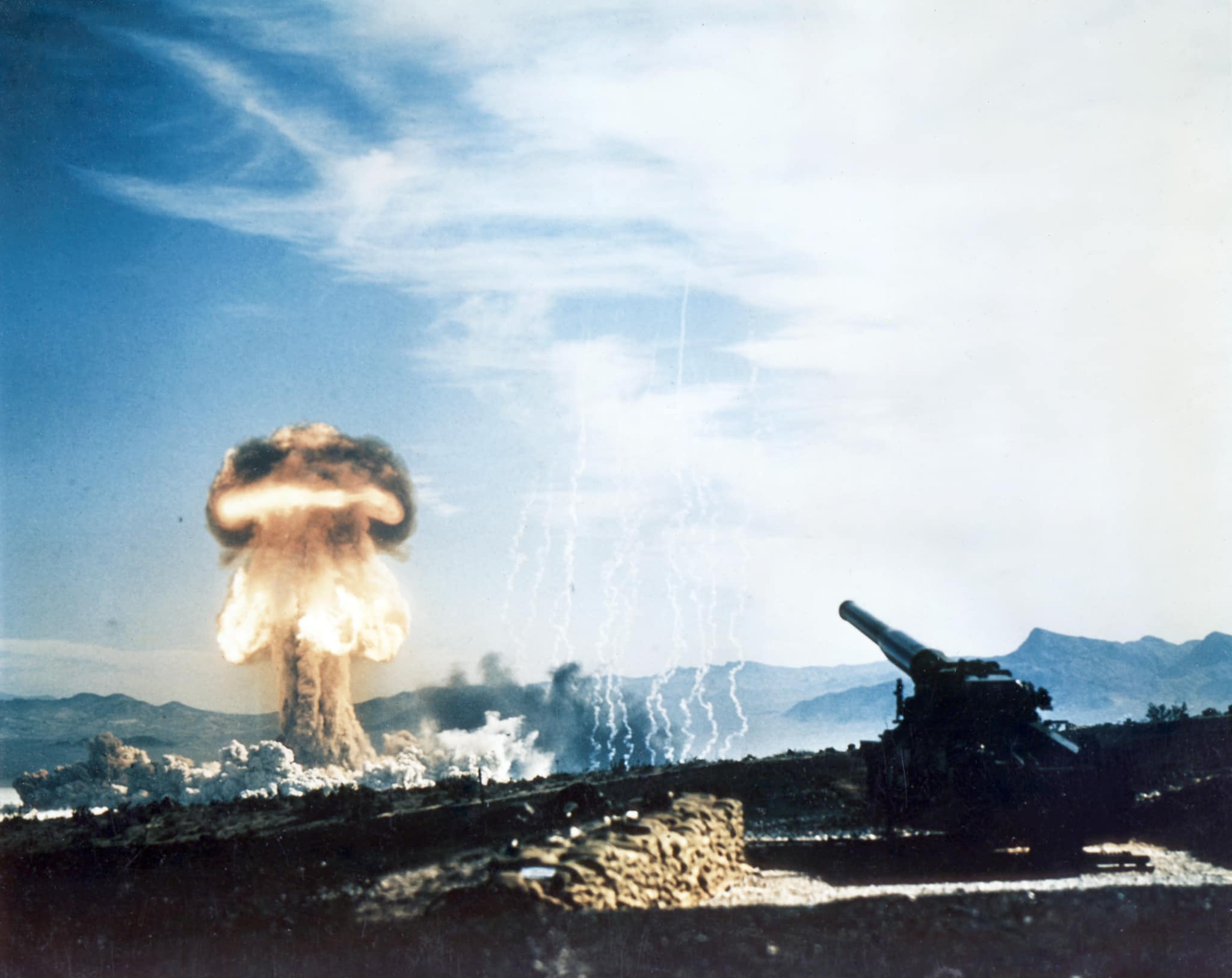
Against the backdrop of the escalating geopolitical situation, the issue of nuclear weapons in Europe is gaining new importance. On the one hand, NATO countries seek to strengthen their deterrent potential in the face of growing threats, while on the other hand, the uncertainty of US policy forces European states to seek alternative ways to ensure their own security.
Today, there are officially about 100 US B61-12 tactical nuclear bombs stored in Europe. These bombs are located in five NATO member countries:
🔹 Italy – up to 35 bombs (Aviano and Ghedi air bases, carried by F-16 and Panavia Tornado).
🔹 Turkey – up to 20 bombs (Incirlik Air Base, carriers unknown).
🔹 Germany, Belgium, Netherlands – 15 bombs each at their bases, carried by F-16 and Tornado.
Is the UK returning to nuclear strategy?
Recent reports indicate the modernization of the British airbase “Lakenheath,” which in the past hosted American nuclear weapons. The reconstruction includes updating 28 out of 33 WS3 underground storage facilities for nuclear weapons and preparing the runway for F-35A, capable of carrying the B61-12.
Experts propose two versions of this activity:
✅ Strengthening US nuclear presence in Europe – if the threat from Russia increases, Washington may return tactical nuclear weapons to British bases.
✅ Global modernization – infrastructure upgrades may be part of an overall strategy that does not involve actual warhead deployment.
B-52 nuclear bombers in the UK
In February 2025, two American strategic bombers B-52 arrived at the Royal Air Force Base “Fairford”. This was an important show of US strength amid escalating tensions in Europe and the Middle East. These aircraft are capable of carrying nuclear weapons and are a key element of the US nuclear triad.
What Lies Ahead for Europe?
Will American nuclear weapons remain in Europe? Some experts consider the most pessimistic scenario, under which the U.S. could completely withdraw warheads from the continent. This would create a security vacuum and force EU countries, particularly France, to reconsider their nuclear doctrine.
At the same time, if Washington decides to strengthen its presence, it would send a clear signal to Russia that NATO is ready to defend Europe by all means necessary.
Conclusion
The U.S. nuclear umbrella remains a key security factor for Europe. However, by 2025, the situation may change, and European countries may have to independently bolster their defense capabilities. What happens next will be decided by Western political leaders.